Commercial glazing in East Tilbury has to do more than fill an opening. It must meet the Part L energy targets checked through an SBEM calculation, keep summer heat and street noise out, and resist the break-ins that shop fronts and ground-floor offices attract. We fit curtain walling, shop-front systems and high-performance insulated units with low-E coatings, warm-edge spacers and thermally broken aluminium or steel frames, specified so the whole-window U-value, g-value and airtightness suit a busy, mixed-use district. The same care covers fire resistance, acoustic performance and the sightlines expected on older frontages, and the sections below show how each applies to your premises.
Key insights
- Commercial glazing in East Tilbury is assessed against Part L, so U-values, g-values and airtightness need to be set for the local heating and cooling seasons.
- The main system types are curtain walling, shop-front glazing and double-glazed façades, chosen on wind load, thermal performance, acoustics and appearance.
- Insulated units with low-E coatings, argon fills and warm-edge spacers improve comfort, lower running costs and help with BREEAM or net-zero goals.
- Thermally broken aluminium, steel or timber-aluminium frames give long life, slim profiles and resistance to East Tilbury's traffic pollution and weather.
- Well-detailed interfaces, movement joints and fixings keep a East Tilbury façade structurally sound, airtight and quick to install.
Why Commercial Glazing Matters in East Tilbury
An office building, a retail frontage or a mixed-use block in East Tilbury lives or dies by its glazing. The glass and frames decide how much heat escapes, how much noise gets in, how hard the premises are to break into and whether the building passes planning and Building Regulations checks. In a dense, heavily trafficked district, glazing is a building-physics decision rather than a finishing touch.
Many sites also sit beside or within protected older buildings, so a modern façade has to respect the surrounding street. That means thinking about mullion widths, how reflective a coating looks from the pavement and what g-value keeps the interior comfortable, while still leaving room for a bold, branded frontage.
The glazing must support your Part L and Part O strategy, fit any BREEAM ambitions and connect cleanly to a stick or unitised curtain wall, so the envelope stays airtight, structurally sound and easy to maintain through East Tilbury's shifting microclimates.
Key Benefits of Modern Commercial Glazing
A current-generation commercial glazing system cuts both heat loss and solar gain, through low-emissivity coatings, warm-edge spacers and argon-filled units, which directly reduces the load on heating and cooling plant. The same package improves security and life safety: laminated glass, multi-point locking and units tested to PAS 24 or approved under Secured by Design. Beyond comfort and protection, these gains help you satisfy Part L and Part Q of the Building Regulations and lower running costs for the life of the building.
Enhanced Energy Efficiency
Energy use in a East Tilbury commercial building becomes predictable once the glazing is specified properly. Pairing high-performance glass with thermally broken frames and well-engineered seals limits conduction and air leakage, and low-E coatings, warm-edge spacers and inert gas fills reduce heating and cooling demand through every season.
Daylight is the other half of the equation. Selective solar-control coatings with the right visible light transmittance let in as much natural light as possible while holding back unwanted heat, so lighting costs fall without the interior overheating. By modelling the façade's g-value, U-value and solar heat gain against orientation and occupancy, we tune each elevation rather than applying one specification to the whole building.
Improved Security And Safety
Glazing is usually discussed in terms of looks and energy, but modern commercial systems are engineered as security and life-safety elements too, protecting East Tilbury premises against deliberate attack and accidental impact. The specification defines a resistance rating, not just a glass thickness.
Laminated, toughened or polycarbonate-reinforced units resist forced entry and smash-and-grab raids while leaving clear sightlines for CCTV. Hardware does the rest: multi-point locks, anti-lift plates and automatic sliding doors tied to access control connect straight into your intrusion alarm and building management system.
For life safety, units are configured to BS EN 356 and BS EN 12600, with fire-resistant glass and compartmentation systems that protect escape routes while holding back smoke and flame.
Types of Commercial Glazing Systems to Choose From
Three families of system cover most commercial projects in East Tilbury: curtain walling, shop-front glazing and double-glazed façade configurations. They differ in how they handle wind loading, what U-values they reach, how they control solar gain and sound, and how they connect to the primary structure. Matching those characteristics to the building's use, exposure and appearance is the core of the specification.
Curtain Wall Glazing Options
Choosing a curtain wall system in East Tilbury comes down to three main approaches: stick-built, unitised and structurally glazed. Stick systems are assembled on site, which suits complex geometry and staged access but needs more labour and coordination. Unitised panels are factory-made, so they close the building faster, hold tighter tolerances and give better quality control, which makes them the usual choice for taller buildings on tight programmes.
Where a cleaner look is wanted, structural silicone or toggle-fixed glazing hides most of the framing while still meeting wind, impact and air-and-water tests. High-performance insulated units, selective coatings and thermal breaks can be built into any of these systems to reach Part L without giving up daylight or transparency.
Storefront Glazing Systems
At street level across East Tilbury, a shop-front glazing system gives you a high-visibility, economical envelope that is quite different from full curtain walling. These are typically stick-built, externally glazed frames running slab to slab or cill to soffit, designed for single-storey heights and modest wind loads.
The system can be tuned to the street while still looking current:
- Flush, thermally broken aluminium framing with slim mullions, hidden fixings and tidy mitred corners that sit quietly against historic neighbours.
- Steel or timber-aluminium shop fronts, which carry higher loads, allow finer sightlines and show off the structure as part of the design.
- Bespoke entrance and corner details, such as oversized doorways, faceted returns and built-in signage channels that bring branding, security hardware and foot traffic together.
Double-Glazed Facade Choices
Above the shop front, the double-glazed façade sets the performance baseline for the rest of the elevation. The options are stick curtain wall, unitised panels, structural glazing and window wall, each offering different tolerances, spans and scope for prefabrication.
To hit the target U-value and g-value without losing daylight, specify low-iron glass with spectrally selective coatings, warm-edge spacers and an argon or krypton fill. In East Tilbury's conservation areas, slimline double glazing within thermally broken steel profiles keeps the original sightlines while lifting thermal performance substantially.
For large feature installations, point-fixed or fin-supported assemblies with laminated inner panes, SGP interlayers and tested fixings handle eccentric loads, blast pressure and vibration from crowds.
Frame Materials and Design for East Tilbury Commercial Glazing
Glass gets the attention, but the frame system usually decides the structural capacity, thermal result and lifetime cost of East Tilbury commercial glazing. The choice is between thermally broken aluminium, aluminium-timber composites and engineered steel, weighed for span, slimness, corrosion resistance and upkeep. Polyester powder coating and anodising both extend life in polluted, high-traffic streets.
Design has to resolve the junctions between curtain wall, ribbon windows and punched openings so the load paths and airtightness line run continuously. Modular systems speed up installation and make future re-cladding simpler.
- Set deflection limits and movement joints for large mullion grids.
- Agree fixings to the primary structure early in the design.
- Standardise profiles to simplify procurement and quality checks.
Energy-Efficient Commercial Glazing for East Tilbury’s Climate
Energy-efficient commercial glazing for East Tilbury has to be matched to the local heating and cooling seasons, the Part L U-value limits and the orientation of each façade. That means checking whole-window U-values, g-values and the psi-values at the edges so the system holds heat in during winter and keeps solar gain down in summer. Reaching the right answer involves comparing double and triple glazing, low-E coatings, spacer types and gas fills against how the building is actually used.
Thermal Performance Requirements
The climate in East Tilbury is mild, but commercial glazing still has to meet demanding thermal requirements covering heat loss, solar gain and operational energy. The façade is designed around three numbers: the U-value for insulation, the g-value for solar control and the visible light transmittance for daylight, balanced against comfort and the energy model.
Performance should be stated at whole-window level, including frame conductivity, spacer type and airtightness, because centre-of-glass figures flatter the result.
- Fix project U-value and g-value targets that satisfy Part L, local planning guidance and the energy model.
- Detail edges, thermal breaks and installation tolerances to limit linear thermal bridging and air leakage.
- Check the finished building with calibrated simulation, on-site airtightness testing and thermal imaging.
Glazing Technologies Comparison
Energy-efficient commercial façades in East Tilbury draw on three technology families: high-performance double glazing, advanced triple glazing and dynamic systems such as electrochromic or thermochromic glass. For most offices and shop fronts, low-E double glazing with warm-edge spacers and an argon fill gives whole-unit U-values of around 1.2 to 1.4 W/m²K at a sensible cost.
Buildings aiming for near-zero energy use move to triple glazing with krypton or optimised cavities, which can bring the U-value below about 0.9 W/m²K while selective coatings keep the g-value acceptable.
Dynamic glazing controls peak solar gain without external shading, which matters on south and west elevations. Laminated, fritted or patterned glass can also carry artwork or reinterpret historic window patterns without any thermal penalty.
Natural Light and Solar Control in East Tilbury Offices
Getting plenty of daylight into East Tilbury offices without glare or overheating starts with modelling the façade orientation, sky conditions and internal reflectance, then selecting glass with the right visible light transmittance and a selective solar-control coating.
- Combine high-selectivity glass (high VLT, low g-value) with external shading and automated blinds, timed to the strong afternoon loads on west-facing elevations in a East Tilbury summer.
- Place planting near the glazed perimeter to soften light, reduce contrast on screens and take the edge off perceived brightness.
- Use laminated or fritted units where privacy is needed, adjusting opacity and pattern density to hold daylight autonomy targets while limiting glare, reflection and overlooking from neighbouring units.
Acoustic Commercial Glazing to Cut City Centre Noise
In the centre of East Tilbury, façade noise levels can reach 65 to 75 dB(A) at peak times, which makes acoustic glazing as important as U-value or g-value. The specification sets defined Rw and Rw+Ctr targets rather than simply choosing thicker glass.
The usual build combines asymmetric laminated panes, a viscoelastic interlayer and a cavity sized to break up coincidence frequencies, so low-frequency noise from buses, sirens and nightlife drops noticeably. Keep at least 4 mm difference between pane thicknesses and tune the cavity depth to avoid resonance at the dominant street frequencies.
Link the façade targets to the internal NR or dB(A) criteria for meeting rooms, breakout areas and reception, so the glazing performs as part of the wider workplace acoustic design.
Security, Fire-Rated and Safety Glazing for Businesses
Protective glazing for East Tilbury premises spans laminated, toughened, wired and polycarbonate-laminate glass, together with multi-layer fire-resisting systems. Each assembly of glass, frame, fixings and seals should be shown to comply with BS 6262, BS EN 356, BS EN 1063 and the fire standards BS EN 13501 and BS EN 1364, so its performance is tested rather than assumed. These high-specification systems can still be built into a façade with slim sightlines, good daylight levels and clear branding, without weakening forced-entry resistance, impact safety or fire compartmentation.
Types Of Protective Glass
Risks vary between East Tilbury projects, but protective glazing falls into three categories, each tested to different standards: security glass, fire-rated glass and safety glass. The right one depends on the threat, the occupancy and the design, including any artwork or heritage constraints.
- Security glass uses laminated, toughened or polycarbonate-clad make-ups to resist impact, manual attack and, in some cases, ballistic threats while keeping the façade transparent.
- Fire-rated glass restricts flame, smoke and heat using gel interlayers or intumescent laminates, holding integrity and, where required, insulation for a rated period.
- Safety glass in toughened or laminated form controls how the pane breaks, reducing injury in doors, partitions and overhead glazing.
Compliance With Safety Standards
Building control and insurers in East Tilbury expect commercial glazing to satisfy a set of safety standards that reach beyond the basic Building Regulations. Impact and security performance are covered by BS 6262, BS EN 12600 and BS EN 356, while fire-rated assemblies fall under BS EN 13501 and BS EN 1364 or 1634.
A gallery, a shop and a distribution unit need different answers. A gallery or high-value showroom typically calls for attack-resistant laminated glass rated P6B to P8B within certified framing. Where heritage rules apply, slim laminated units, matched sightlines and fire-resistant glass are combined, with test evidence and third-party certification backing every bespoke detail.
Integrating Security With Design
Security glazing works best when protection, fire strategy and appearance are planned together from day one rather than added at the end. In East Tilbury's tight urban grain, forced-entry resistance, blast performance and compartmentation have to coexist with a polished frontage, which means choosing laminated, toughened or gel-interlayer fire-rated systems that fit the façade grid, the sightlines and the daylight targets.
Hardware, framing and fixings must be coordinated so certified performance is kept while the profiles stay slim and the spans large.
- Specify the glass make-up (thickness, interlayers, coatings) for security, acoustics and solar control at the same time.
- Align fire-rated zones with escape routes and smoke-control modelling.
- Test attack, fire and impact scenarios in digital models before fabrication starts.
UK Building Regulations and Part L for Commercial Glazing
Because the façade now accounts for a large share of a building's energy performance, Part L (Conservation of Fuel and Power) sets firm requirements for how commercial glazing in East Tilbury and the rest of England is specified and installed. Compliance means meeting U-value limits, controlling g-values, limiting linear thermal bridging and proving airtightness, all while keeping the look of the building and, in many streets, respecting protected historic architecture.
Evidence comes through SBEM calculations, which check that the window-to-wall ratio and solar gains stay within the limiting values. Low-E coatings, warm-edge spacers, argon or krypton fills and thermally broken frames let a building reach demanding energy figures without sacrificing transparency, daylight or the rhythm of an established elevation.
Commercial Glazing for Retail, Hospitality and Leisure Venues
For shops, restaurants, bars and leisure venues in East Tilbury, commercial glazing earns money as well as passing Part L. The frontage shapes brand presence, dwell time and how customers move, so visible light transmittance, colour rendering and solar control are balanced against the experience you want to create.
- Insulated units with selective coatings and interlayers manage glare while keeping merchandise visible and a restaurant interior inviting.
- Digital frits, decorative patterns and switchable privacy glass zone the space, screen back-of-house areas and support changing branding.
- Structural glazing, oversized panes and sympathetic adaptations in conservation streets, using low-iron glass, discreet fixings and laminated safety layers, maximise sightlines while meeting heritage constraints.
Commercial Glazing for Industrial and Warehouse Buildings
Daylight, safety and thermal control in East Tilbury's industrial and warehouse stock have to be achieved without upsetting processes or logistics. The starting point is the load paths, racking layout and vehicle movements, with the glazing engineered to suit. Insulated units with low-E coatings, solar-control interlayers and warm-edge spacers steady internal temperatures and protect temperature-sensitive stock.
Impact-resistant laminated glass is normally paired with thermally broken aluminium or steel frames certified to PAS 24 or EN 1627 for security and BS 6262 for safety. Large rooflights, clerestory strips and curtain wall junctions raise lux levels while keeping U-value and airtightness targets. In converted historic sheds, decorative glazing can sit within robust industrial frames so character survives without weakening operational resilience.
Costs, Budgeting and ROI of East Tilbury Commercial Glazing
Daylight, security and thermal control in East Tilbury's commercial buildings only make sense if the figures add up over the building's life. That calls for a budget that lines up capital cost, running cost and whole-life performance, starting with a detailed breakdown: glass specification, frame system, access equipment, out-of-hours working and the interfaces with the façade, services and building management system.
Return on investment is measured by comparing energy, productivity and maintenance against a do-minimum baseline:
- Energy savings from lower heating and cooling loads through selective coatings and thermally broken frames.
- Operational efficiency through reduced maintenance and quicker replacements with modular glazing.
- Value uplift in rental yield, occupancy and EPC or sustainability ratings, supporting green leases and future refinancing.
How to Choose a Commercial Glazing Company in East Tilbury
Choosing a commercial glazing contractor in East Tilbury is a decision about a long-term façade partner, not a comparison of day rates. Their design, installation and aftercare will shape the building's performance for decades, so look first for a track record on complex envelopes such as curtain walling, structural glazing and hybrid systems.
Ask about their heritage experience, including listed buildings and conservation frontages where slimline profiles or bespoke decorative glass must satisfy a conservation officer. Review their thermal, acoustic and solar-control specifications and check their familiarity with triple glazing, warm-edge spacers and high-performance coatings.
Request project-specific U-value calculations, wind-load assessments and interface drawings. Confirm third-party certification, digital design capability such as BIM and clash detection, and whether they prototype and test. Finally, make sure the warranties are clear and the maintenance regime is written down.
Commercial Glazing Installation, Disruption and Project Management
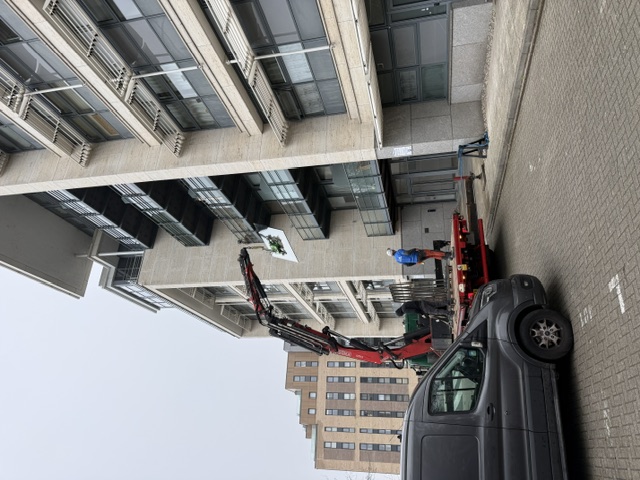
A good specification sets the standard, but commercial glazing in East Tilbury succeeds or fails in the sequencing, fitting and management on a live site. Trades, access and safety all have to be coordinated, often on a cramped city-centre plot next to protected buildings, while the new glass goes in.
Disruption is kept down by fixing the logistics early: crane positions, road closures, just-in-time deliveries and phased handover of each elevation. BIM and 4D sequencing let brackets, interfaces and tolerances be clash-checked before anyone climbs the scaffold.
- Define the installation method, including fixing hierarchy, tolerances and movement joints.
- Programme around occupied-building constraints such as noise windows, dust control and decant routes.
- Manage interfaces from curtain wall to structure, fire-stopping, airtightness, drainage and commissioning sign-off.
Glazing Maintenance, Warranties and Long-Term Performance
Even a perfectly designed and installed façade in East Tilbury only stays on specification if maintenance, warranties and lifecycle planning are part of the original strategy. Maintenance schedules should follow manufacturer guidance, exposure and usage class, with inspections for seal failure, coating wear and hardware drift.
Warranties belong inside the asset-management model: know what triggers cover, which cleaning products are excluded, what paperwork is required and how fast rectification must happen. Feeding temperature, humidity and façade sensor data from the building management system into predictive maintenance lets you step in before thermal stress or water ingress damages the units.
End-of-life scenarios, whether re-gasketing, unit replacement or full re-cladding, should be mapped into the budget forecast so optical quality, U-values and airtightness are sustained.
This work is carried out by our East Tilbury glaziers as part of our commercial glazing service for Tilbury.
Frequently Asked Questions
How Does Commercial Glazing Impact Office Staff Wellbeing and Productivity in East Tilbury?
Staff work better in offices with good natural light, steady temperatures and low noise, and the glazing controls all three. High-performance units limit glare, stop rooms near the windows overheating or chilling and support natural daily rhythms, so people feel more comfortable and tire less. The right coatings and frames reduce solar gain while keeping daylight, which also trims the load on heating and cooling. Acoustic laminates remove the distraction of East Tilbury traffic. Together these make a healthier, calmer workspace that supports concentration and collaboration.
Can Commercial Glazing Designs Support Branding and Visual Identity for East Tilbury Businesses?
Yes. A façade can carry the brand without a single poster. Fritted glass patterns, printed interlayers and colour-tinted units bring your visual identity into the building itself, and logos, wayfinding cues and corporate colours can be worked into curtain walling, screens and internal partitions. Done properly, this is achieved without sacrificing solar control or U-values, and every unit still complies with the relevant British and European glazing standards, so brand expression and compliance go together on a East Tilbury high street.
What Planning Permissions Affect Commercial Glazing on Listed or Heritage Buildings in East Tilbury?
On a listed building you will need listed building consent in addition to any planning permission, and the proposal must follow local and national policies on heritage protection. Any change to frames, glass or performance will be examined for its effect on sightlines, profiles and materials. Slimline double glazing or secondary glazing is often acceptable, provided you can show the work is reversible, disturbs little original fabric and looks right. Talking to the East Tilbury conservation officer early reduces the risk of refusal and speeds up approval.
How Does Commercial Glazing Influence Insurance Premiums for East Tilbury Commercial Properties?
Upgrading to certified security glazing often brings premiums down. Replacing old plate glass with laminated units rated to BS EN 356 P6B tells the insurer that forced entry, business interruption and injury risk have all fallen, and those are the factors that drive the quote. Adding fire-rated glazing, blast-mitigation film and monitored glass-break sensors strengthens the risk profile further. Ask the insurer for an engineering survey after the work so the improvements are recorded and reflected in the renewal terms for your East Tilbury property.
Are There Local East Tilbury Grants or Incentives for Upgrading to Modern Commercial Glazing?
Support exists, though it changes from year to year. Start with the local council and any regional authority covering East Tilbury, which often run energy-efficiency schemes aimed at cutting carbon from commercial buildings. Look for low-carbon or net-zero grants, business energy-efficiency programmes and rate-relief incentives. Applications are stronger when you can state the U-values, g-values and acoustic ratings of the new glazing, show the expected kWh savings and payback period, and link the project to ESG reporting or a recognised building performance benchmark.
Summary
The performance of a East Tilbury commercial building rests on its glazing envelope. Choosing the right system, frame material and low-U-value units turns the façade into an asset that saves energy, keeps noise out and satisfies Part L and the security standards your insurer expects. With a capable commercial glazing contractor, a sensible installation programme and a maintenance plan, the benefits build year after year. Call us for a free site survey and a detailed quotation for your premises.